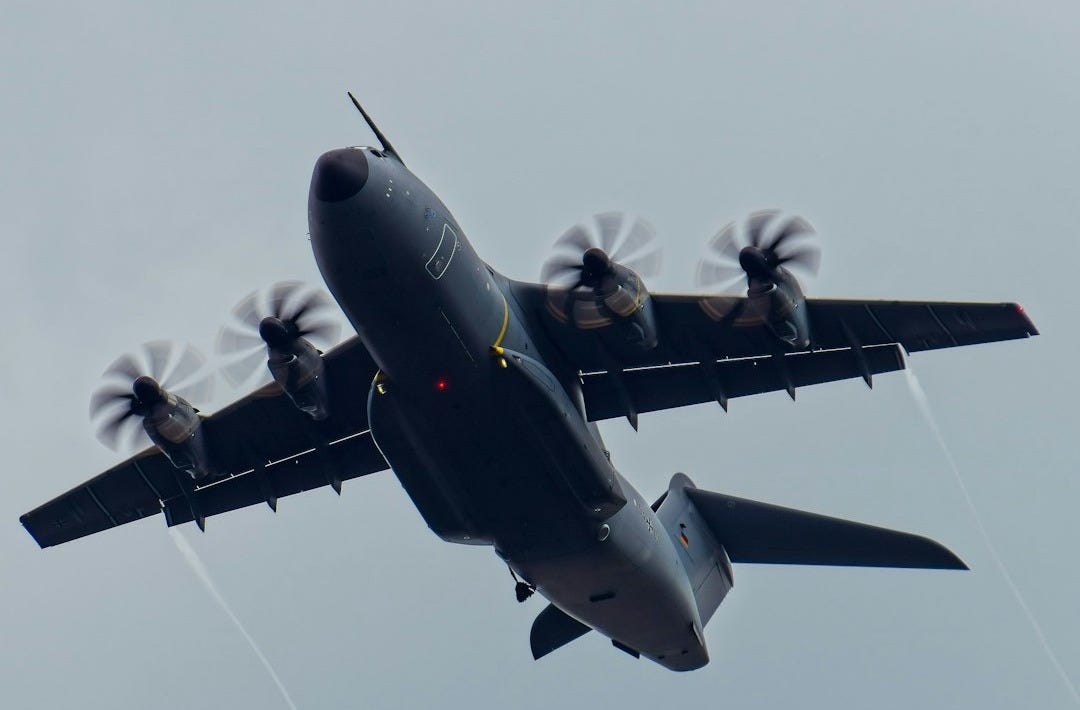
Germany’s armed forces: readiness, rearmament and reality

For decades, Germany treated its armed forces as a political afterthought. The Bundeswehr existed largely as a symbolic commitment to alliances rather than as a force designed to fight and win wars. Equipment was cannibalised, ammunition stocks run down, training curtailed and procurement paralysed by process.
Russia’s invasion of Ukraine ended that illusion overnight — at least rhetorically. Chancellor Olaf Scholz proclaimed a Zeitenwende, promising a historic break with complacency and a return to military seriousness. Billions were pledged. Speeches hardened. Expectations rose.
The harder question, four years on, is simpler and more uncomfortable: is the Bundeswehr actually becoming capable of fighting a modern war — or merely better at talking about it?
A force hollowed out
Measured by almost any conventional metric, the Bundeswehr entered the Ukraine war era in a depleted state.
Years of underinvestment left Germany short of:
combat-ready units
spare parts and ammunition
deployable air defence
functioning heavy equipment
Training exercises were routinely scaled down because vehicles were unavailable. Helicopters failed to fly. Infantry units trained with broomsticks. In several cases, Germany’s NATO commitments could only be met on paper.
This was not an accident. It was the predictable result of a political culture that treated war as something that happened elsewhere — preferably under American leadership — and defence as an area where moral signalling could substitute for material preparation.
The pattern was visible long before Ukraine. In Afghanistan, Germany sustained combat casualties over nearly twenty years while political leaders insisted the Bundeswehr was not at war. By refusing to name the mission honestly, Berlin avoided preparing its forces honestly — blurring objectives, constraining rules of engagement and reinforcing a culture in which acknowledging combat was treated as a political failure rather than a military necessity.
Zeitenwende: money without momentum
The €100bn special defence fund was meant to reverse that decline. On paper, it looked transformative. In practice, progress has been uneven.
Procurement remains slow. Projects take years to move from announcement to delivery. Germany has improved its ability to place orders, but not its ability to field combat power quickly. Ammunition shortages — one of the most basic indicators of readiness — persist, despite repeated warnings from NATO planners.
German reluctance to act has been matched by an inability to protect its own secrets. When Moscow intercepted a confidential Luftwaffe call on Taurus missile planning, it was less a scandal about escalation than a demonstration of basic operational incompetence — handed to the Kremlin on a silver platter.
Leadership matters — and so does culture
One clear inflection point came with the replacement of Christine Lambrecht by Boris Pistorius as defence minister. Pistorius spoke openly about the need for Germany to become kriegstüchtig — fit for war — a phrase that would have been politically radioactive only a few years earlier.
But leadership alone cannot fix a structural problem. The Bundeswehr is a parliamentary army by design, constrained by layers of oversight intended to prevent abuse. Those safeguards are democratically legitimate. Yet in practice they have often translated into:
blurred responsibility
endless review cycles
reluctance to take operational risk
The result is a military that struggles to adapt at the speed modern warfare demands.
Manpower, mass — and the conscription question
Capability is not just about hardware. It is about people.
Germany faces a severe personnel problem. Recruitment targets are routinely missed. Retention is poor. An ageing force struggles to generate mass, even as planners acknowledge that high-intensity conflict in Europe would require far more manpower than Germany currently fields.
This has reopened a debate once thought settled: conscription.
Calls to revive some form of compulsory service are no longer confined to the political fringes. Supporters argue that without a larger trained reserve, Germany cannot credibly defend itself. Critics counter that reintroducing conscription would be costly, unpopular and militarily inefficient.
What is clear is that the Bundeswehr’s current force model does not match the strategic environment Germany now faces.
NATO commitments and the credibility test
Germany’s defence problem is not only national. It is alliance-wide.
As Europe’s largest economy, Germany sits at the centre of NATO’s deterrence posture. Its ability to deploy a fully equipped division, to sustain forces over time, and to defend NATO’s eastern flank is no longer an abstract planning exercise — it is a credibility test.
The decision to permanently station German troops in Lithuania marked a significant shift. But deployments matter less than readiness behind them.
On Ukraine, Germany has been the slowest of the major European powers to offer to put boots on the ground. Yet, security guarantees only mean something if they are backed by troops near the frontline.
The bottom line
Germany has begun to talk about war in realistic terms. That alone marks a cultural break. But rhetoric does not equal readiness.
The Bundeswehr is improving — slowly. Some procurement bottlenecks have eased. Political language has hardened. Defence is no longer taboo. Yet the distance between Germany’s strategic responsibilities and its military capabilities remains substantial.

